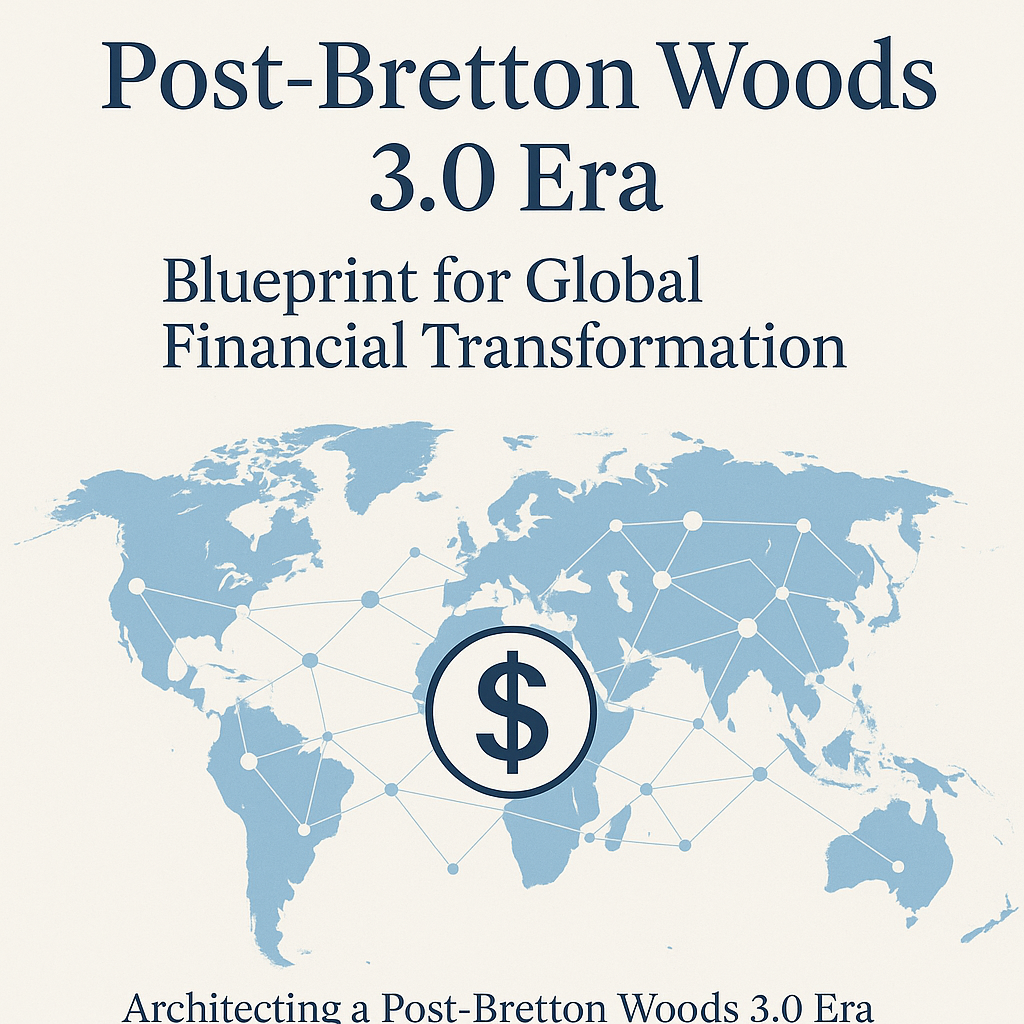
Post-Bretton Woods 3.0 sm

EXECUTIVE SUMMARY STRUCTURE
- Post-Bretton Woods 3.0 sm
- Hybrid Decentralized Treasury Bonds + Centralized Digital Dollar
- JNJ & Associates LLC | Dividend Desk Research)
- Securing Monetary Stability in the Blockchain Age
1. INTRODUCTION: A NEW MONETARY ORDER
- The original Bretton Woods system (1944): Gold-backed dollar anchored global finance
- Post-1971 (Nixon shock): Fiat dollar maintained dominance via trust, Treasury markets
- Today: Digital economies, global instability, rising debt demand a new framework
“We are not rebuilding the old system — we are ushering in the first monetary architecture of the decentralized era.”
2. THE HYBRID MODEL
Decentralized Treasury Bonds (dTBs)
- On permissioned blockchains (e.g., Ethereum L2 or U.S.-approved network)
- Real-time clearing/settlement via smart contracts
- Programmable features: Maturity auto-execution, coupon disbursement, visibility
- Institutional buyers, KYC-compliant wallets only
Centralized Digital Dollar (dUSD or USDC+)
- Fiat-backed stablecoin issued by U.S. Treasury or approved private partner
- Full AML/KYC oversight, programmable for sanctions/enforcement
- Fully redeemable 1:1 with USD
Synergy and Innovation
- Enables fractional, borderless, real-time financial system
- Bridges the Fed, SEC, IMF, and crypto-native institutions
3. BENEFITS TO THE UNITED STATES
| Category | Decentralized Bonds (dTBs) | Centralized Coin (dUSD) |
|---|---|---|
| Debt Liquidity | 24/7 global access | Seamless settlement |
| Security | Immutable record | Regulatory guardrails |
| Efficiency | Reduced friction | Direct-to-wallet issuance |
| Dollar Dominance | Preserves reserve currency status | Anchors global commerce |
4. TECHNOLOGY STACK
Smart Contracts for Bonds:
- Issuance (ERC-1400 or RWA token standards)
- Maturity, coupon schedule automation
- Investor access controls via wallet whitelists
Stablecoin Infrastructure:
- Regulated mint/burn through U.S. nodes
- Potential integration with FedNow rails or private settlement layer
- Cold storage, CBDC-resilient bridge built in
5. TIMELINE TO IMPLEMENTATION
| Phase | Milestone | Target Date |
|---|---|---|
| Phase I | Pilot U.S. Municipal Bond on-chain | Q4 2025 |
| Phase II | Treasury-backed Stablecoin Launch (dUSD) | Q1 2026 |
| Phase III | IMF/Global Framework Integration | 2026–2027 |
| Phase IV | Market Liquidity >$5T via Hybrid System | 2030 |
6. POLICY & PARTNER PATHWAYS
- GENIUS Act alignment (Government Embracing New Innovations Using Smart contracts)
- Collaborate with:
- U.S. Treasury: regulatory sandbox & issuance models
- Federal Reserve: dUSD pilot with wholesale banks
- IMF & BIS: blueprint for hybrid global finance
- G20 Partners: sovereign tokenized bonds on permissioned interchain
7. CALL TO ACTION
“History will remember who shaped the financial foundations of the digital era. We invite policymakers, institutions, and innovators to partner with us on the new standard.”
— J. Nixon Joseph, MBA | Chairman, Post-Bretton Woods 3.0 Initiative
White House / Treasury
- “Ensure the dollar remains the foundation of a secure and modern global financial order.”
- “This initiative preserves U.S. monetary leadership while embracing 21st-century technologies.”
Institutional Investors
- “Digitized treasuries give you greater transparency, access, and efficiency in sovereign fixed income.”
- “No more T+2 — instant settlement, smart contract validation.”
IMF / Global Central Banks
- “Let’s build a hybrid framework that respects regulatory needs while enabling permissioned decentralization.”
- “Global adoption starts with digital credibility — the U.S. will lead responsibly.”
- Tokenized Sovereign Debt Markets: Risk, Transparency, and Access
- CBDC vs. Stablecoin: Interoperability or Fragmentation?
- Blockchain Yield Curve: How dTBs Shape Interest Rate Discovery
- The Role of Smart Contracts in Public Debt Lifecycle Management
- Historical Analysis: Why Every Monetary System Has a Sunset